
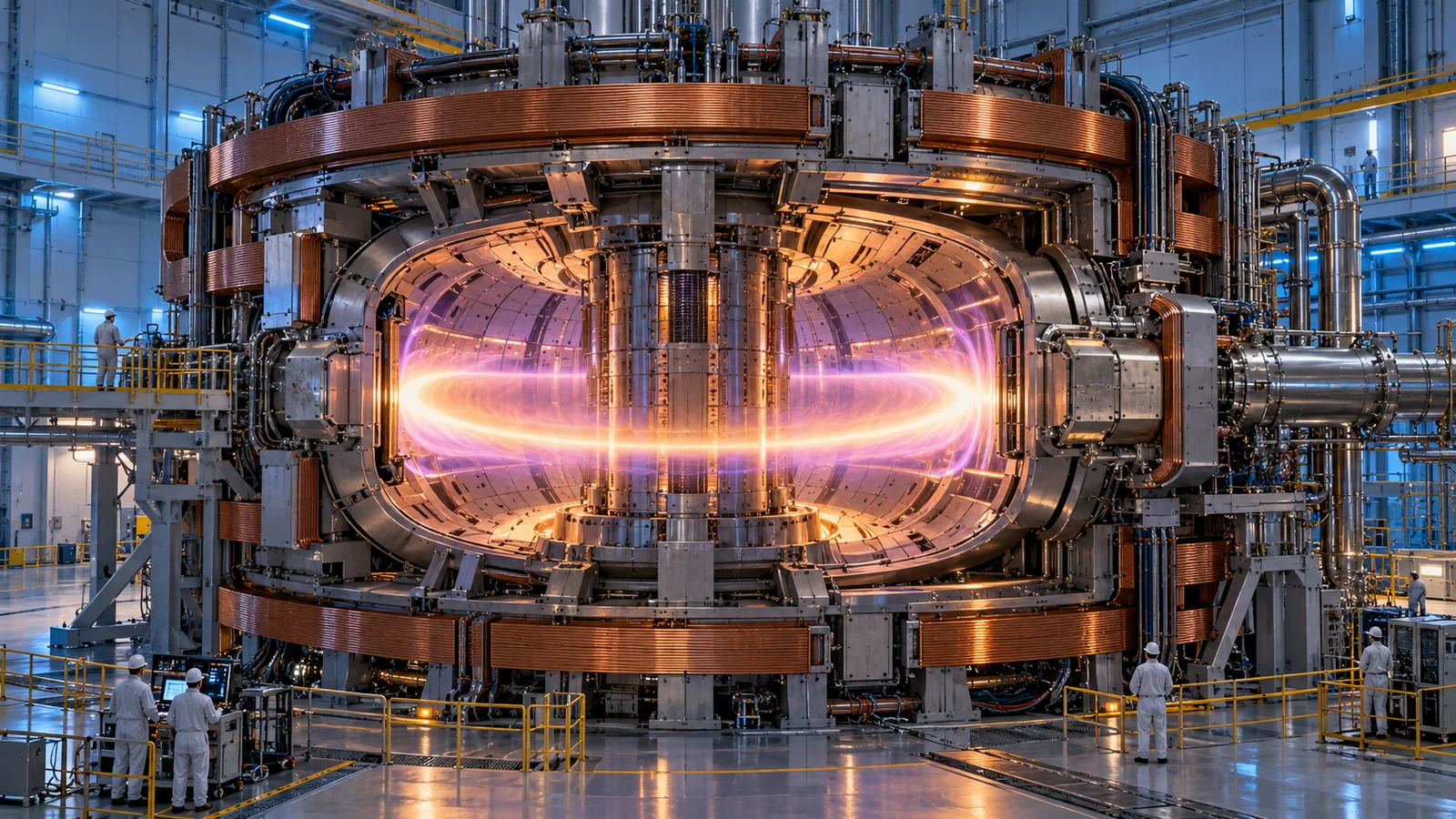
Nuclear fusion is no longer just an idea: experiments have produced plasmas and reactions that meet important scientific milestones. But starting a reaction, getting more energy out of a fuel target than the energy delivered to it, and supplying electricity to a power grid are three different achievements. Research has made real progress; a fusion plant that delivers commercial electricity remains an engineering challenge to solve.
Fusion is different from fission
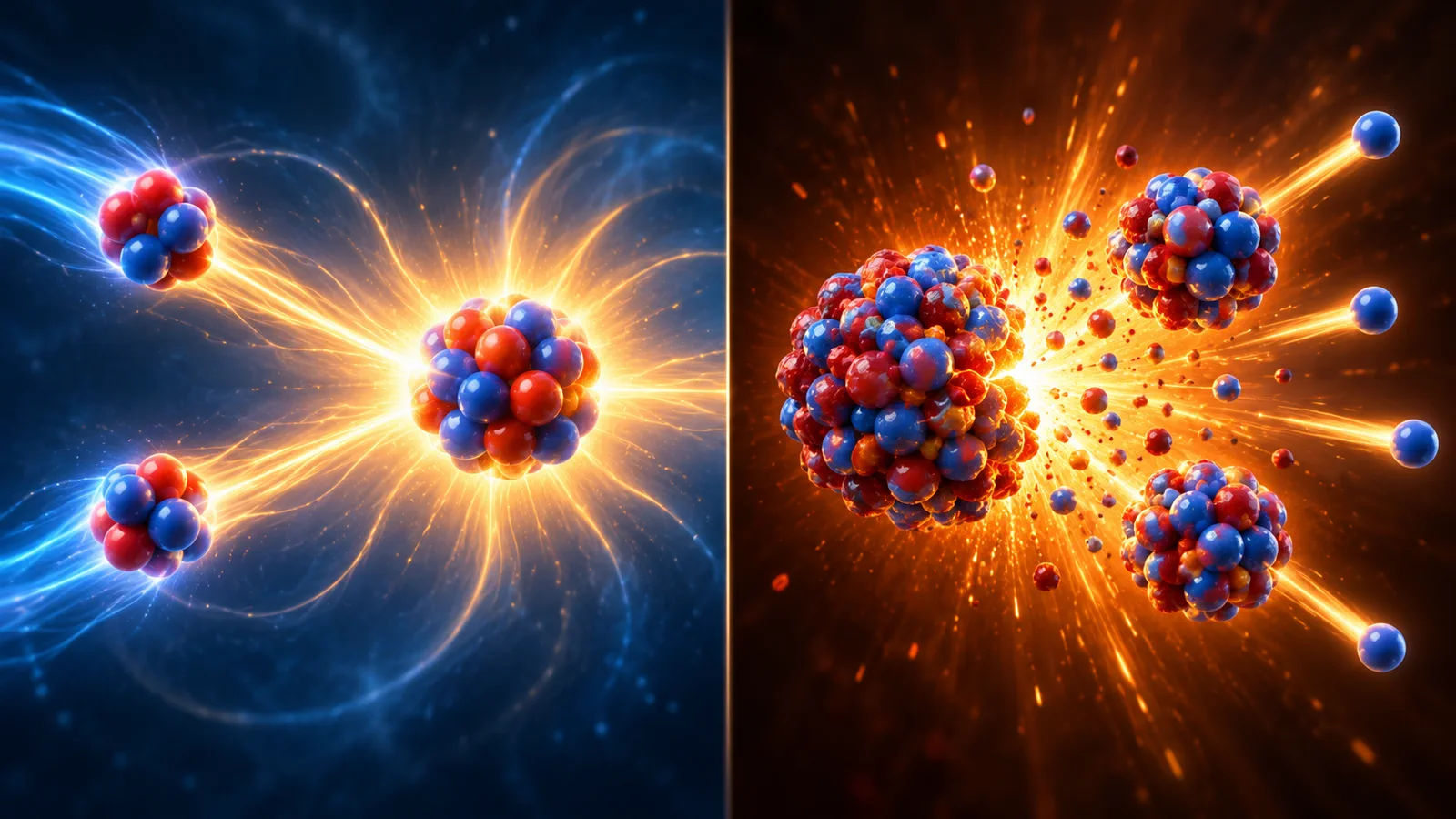
In fission, used by today’s nuclear power stations, heavy atomic nuclei split and release energy. In fusion, light nuclei join. One reaction studied for future reactors combines deuterium and tritium, producing a helium nucleus, a neutron and energy. The fuel must be heated to extreme temperatures until it becomes plasma.
Two main approaches try to confine that plasma: magnetic devices such as tokamaks, and inertial fusion, where laser pulses compress a tiny fuel capsule. These experiments have different designs and goals; neither is simply a miniature ready-to-run power plant.
What NIF has demonstrated
In December 2022, the US National Ignition Facility produced 3.15 megajoules of fusion energy after delivering 2.05 megajoules of laser light to the target. It was an important scientific result, followed by repeated and higher-yield experiments. The comparison is between fusion energy and the laser energy that reached the capsule, not all the electricity used to power the lasers and facility. It therefore is not a positive electricity balance for the whole site, nor electricity supplied to the grid. LLNL documents the results and what it means by ignition.
That distinction does not diminish the experiment. It explains what was measured. An experiment can show that the fuel produced more energy than it received at the target while the complete apparatus still requires much more energy to operate.
Why ITER is not a commercial power station
ITER is an international research project focused on magnetic confinement. Its current official schedule places the start of research operations in 2034 and the start of deuterium-tritium operation in 2039. Its purpose is to study plasma and relevant technologies, not to supply commercial electricity to the grid. Those dates are project milestones that may be updated; they are not a promise of when households will receive fusion power. ITER project schedule.
The engineering work beyond an experiment
A reactor would need to run for long periods, extract heat reliably, and keep magnets, materials and control systems within operating limits. Fuel supply is another challenge: ITER notes that the world supply of tritium would not meet the needs of future power plants, and that the project will test experimental in-vessel breeding blankets. ITER’s tritium work and project plan.
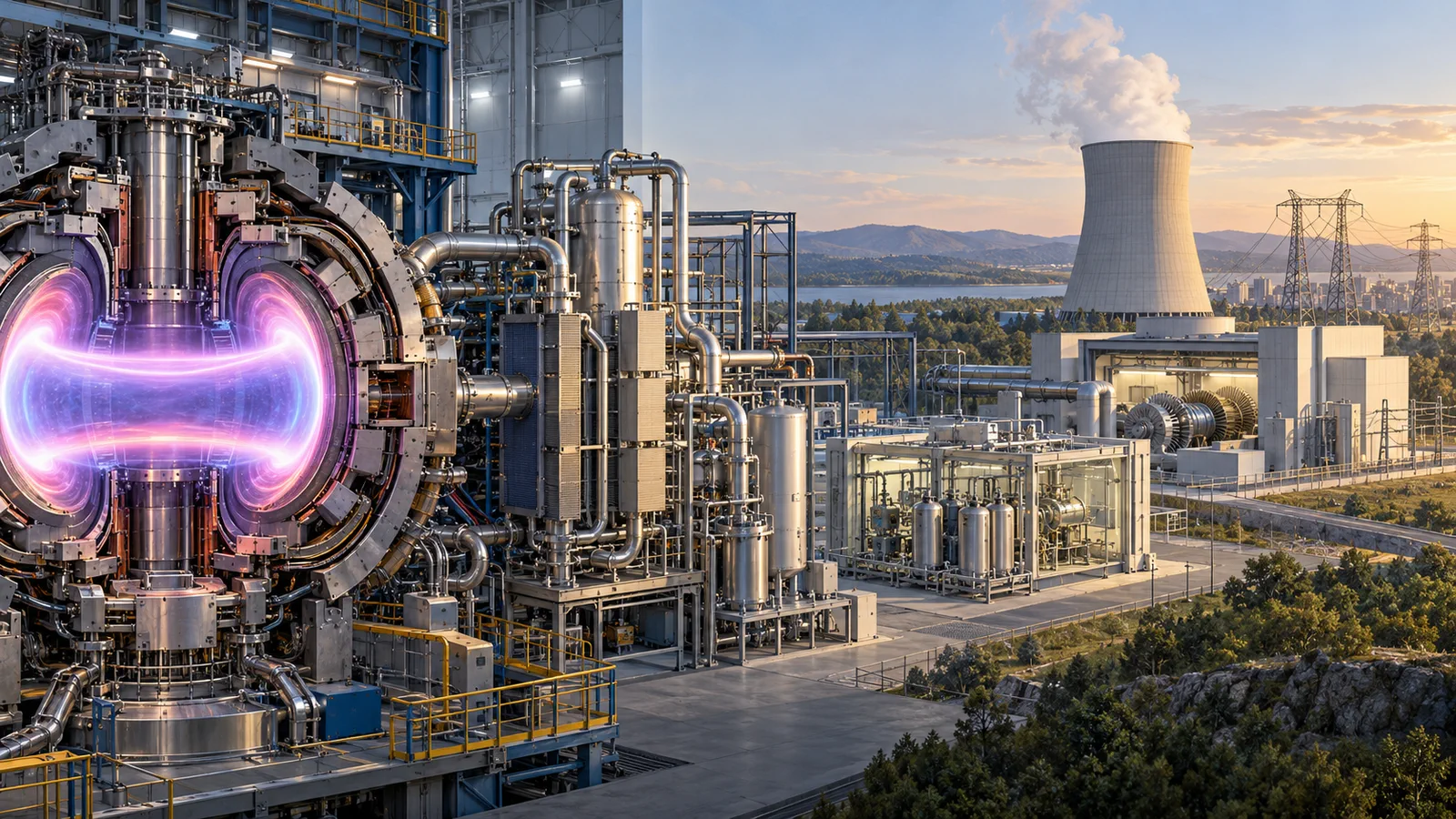
Other challenges include maintaining components exposed to energetic neutrons, removing heat, overall efficiency and cost. Reaching fusion conditions in a plasma is only one step: a power station must convert energy into electricity, run its own equipment and do so continuously and economically.
Where does fusion stand today?
Fusion has produced significant experimental results, including energy gain relative to the laser light delivered to the target in an NIF experiment. That does not yet demonstrate net electricity from the complete facility. ITER and other programmes are working on plasma and engineering questions; future plants’ schedules, costs and performance have not yet been proven in commercial operation.

Comments
Comments
Join the discussion respectfully: reasoned criticism is welcome; avoid threats, abuse, personal data and promotional links.
To join the discussion, you'll need to sign in with your WordPress.com account. This feature will be available when the site launches.